
II.1.3. Les appareils à pellicule souple
Le Cyclographe de Damoiseau
En 1889, profitant de l’arrivée du film souple introduit par George Eastman (1888), Damoizeau invente le Cyclographe, premier appareil pouvant prendre des vues à 360° (et plus) [14], qui va détrôner au yeux d’Albert Londes le Cylindrographe de Moëssard; et ce pour deux raisons : parce qu’il enregistre l’horizon entier sur un même cliché, mais également parce qu’il permet de faire varier la couverture de champ par le changement de l’objectif.
À la différence des appareils précédents, le Cyclographe dispose d’un objectif fixe (non pivotant) muni d’une fente [15] (figure II-9). C’est la synchronisation de la rotation du boîtier et du défilement à plat du négatif souple entre deux rouleaux qui permet l’enregistrement d’un image nette sans déformation. La perspective de l’image panoramique est automatiquement curviligne.
Le cyclographe de Damoizeau définira un standard et un principe duquel dériveront quantité d’appareils de prise de vue panoramique [15]. Parmi ceux-ci, on peut citer, le Kodak Cirkut (1904, USA) ou, plus récemment, le Roundshot (1992, Allemagne), entièrement automatisé et permettant une rotation indéfinie.
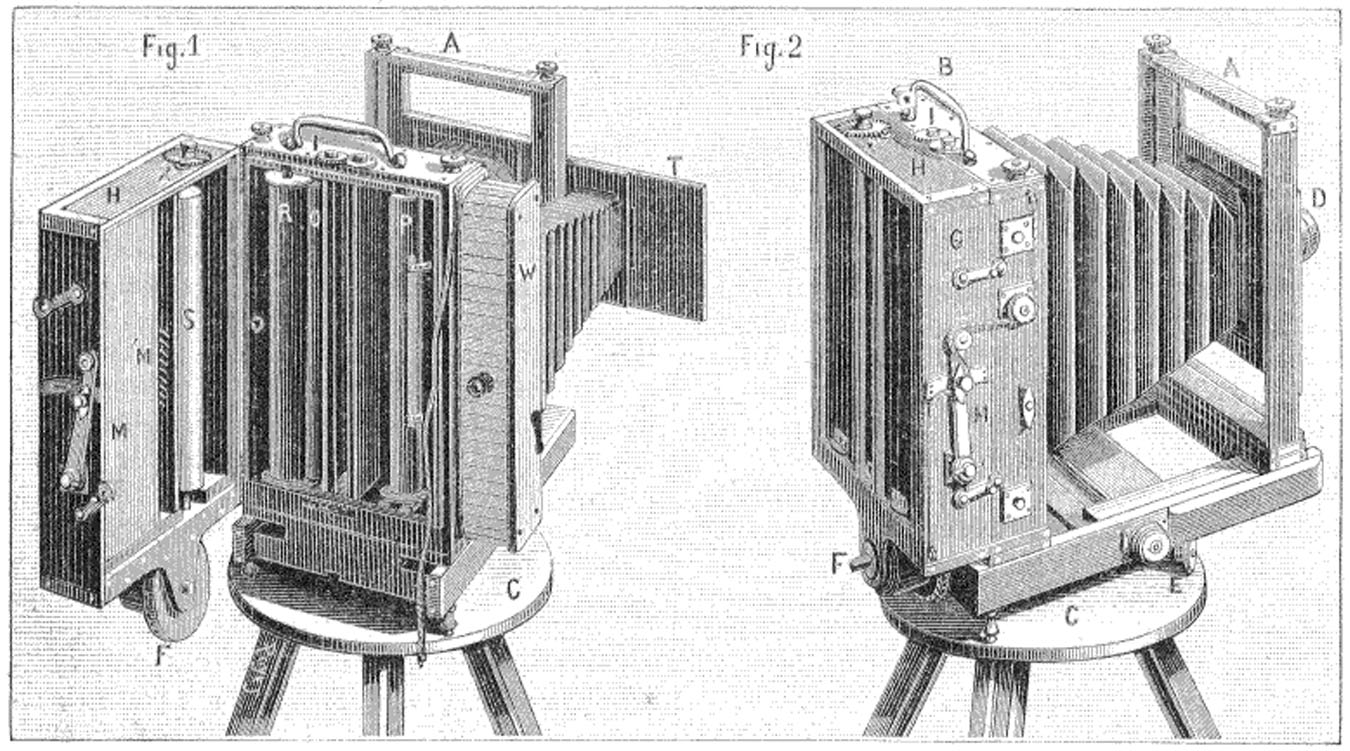
Figure II-9a
Premier cycographe de Damoizeau (Brevet n°197950, 03.05.1889)
Source : La nature, Volume 1891 : Dix-neuvième année, premier semestre : n° 914 à 939
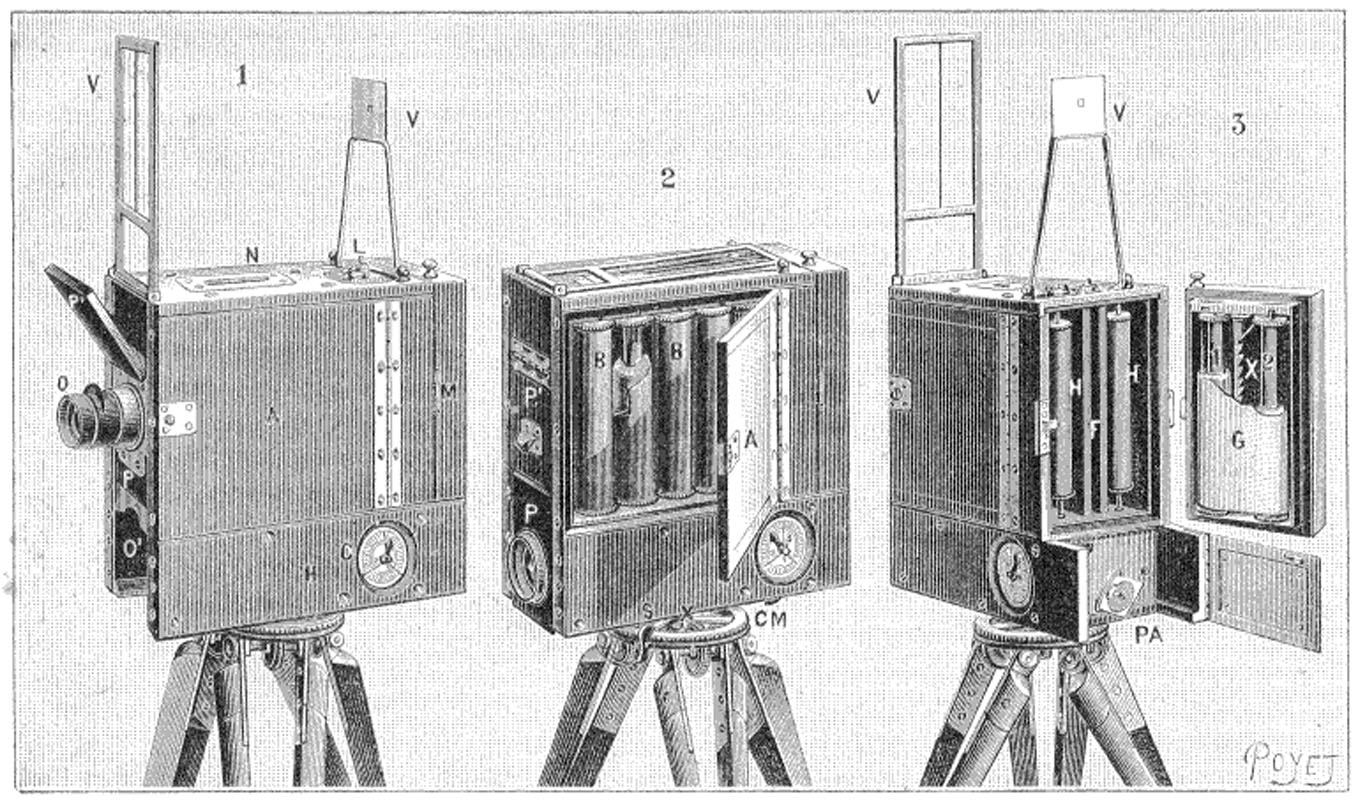
Figure II-9b
Second cyclographe de Damoizeau (1121Brevet n°228548).
Source : La nature, Volume 1894 : Vingt-deuxième année,deuxième semestre :
n° 1096 à , 11.03.1893
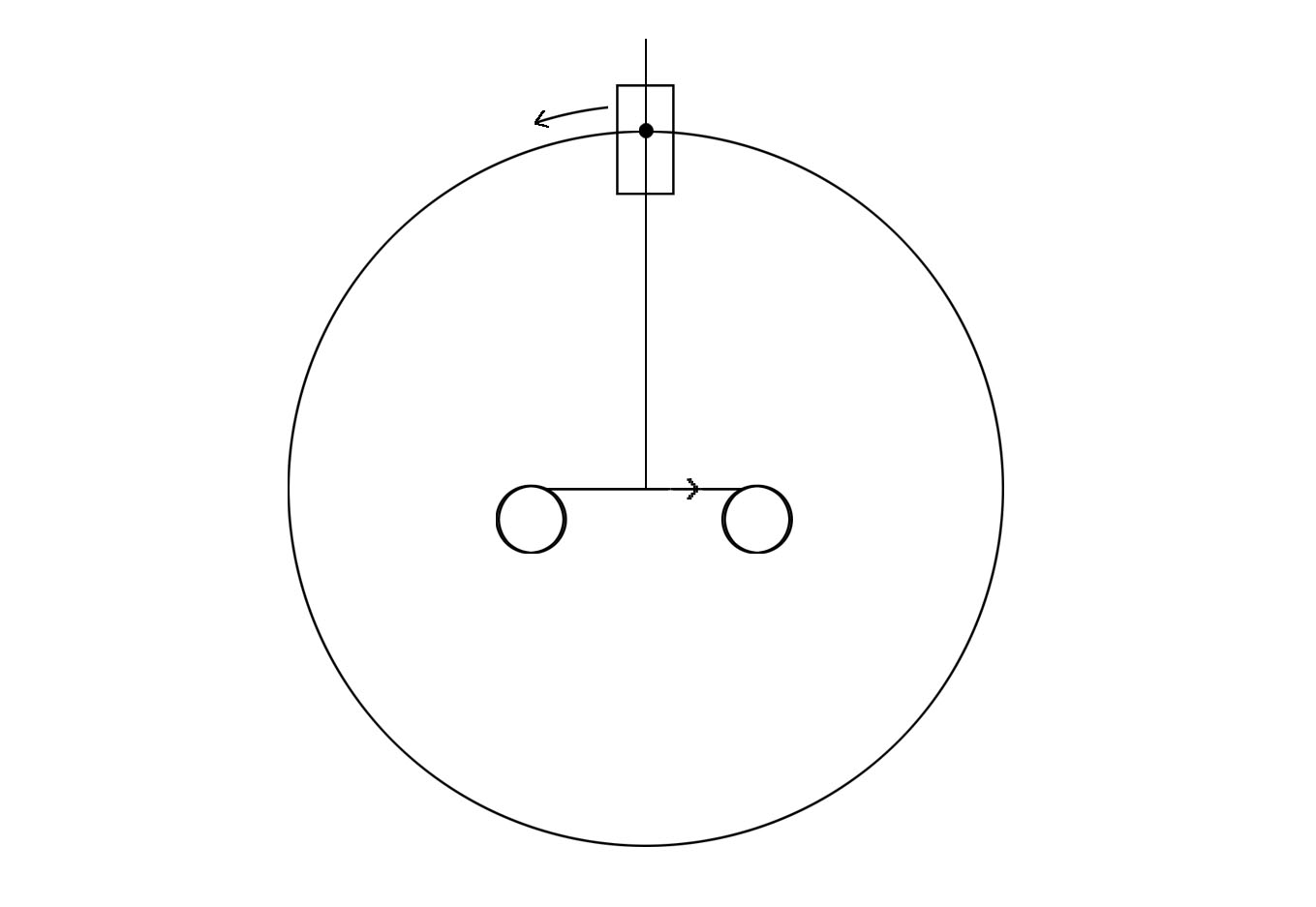
Figure II-9c
Schéma de principe de la synchronisation de la rotation de la platine et de la translation du film.
[14] Brevet n°197950, 03.05.1889
Pour un nouvel appareil de photographie pouvant embrasser l’horizon tout entier et destiné à obtenir des vues panoramiques pour levers de plans, paysages, etc,.
Source : www.brevetsphotographiques.com
La même année à Berlin, Rudolph Stirn réalise également un dispositif de prise de vue à 360 degree, la “Wonder Panoramic Camera”, conçu par J. R. Connon et breveté aux États-Unis par Carl Stirn.
[15] Dans le cas du cyclographe, ou des appareils fonctionnant sur le même principe, l’enregistrement photographique s’opère par la rotation de l’optique autour du point nodal; au contraire des appareils à objectif pivotant (swing lens) pour lequel ce point de rotation idéal est la pupille d’entrée.
Le non respect de l’invariance du point nodal (ou de la pupille d’entré) entraîne une modulation du point de vue et des des déformations d’ordre spatial.
Glossaire des termes techniques de l’optique photographique.
Source : www.galerie-photo.com/glossaire-optique.html

Le Cyclograph
L’histoire se complique quelque peu car il existe un autre Cyclographe, ou plus précisément Cyclograph, inventé par A.H. Smith en 1895 pour reproduire sur une surface plane les figures gravées sur des vases antiques [16]. L’objectif, muni d’une fente, et le boîtier sont fixes. L’enregistrement photographique résulte des rotations synchronisées du défilement du film derrière la fente et de la rotation de l’objet sur son axe. L’apparente divergence de l’objet à photographier comme du procédé mis en œuvre pour y parvenir cache en fait une équivalence : le négatif produit par l’un et l’autre sont de même nature spatio-temporelle.
Le Périphote
Il faut également signaler le Périphote (1899, figure II-11), appareil de prise de vue panoramique breveté par les frères Lumières en 1899. Malgré une logique et un principe technique différent, le périphote produit le même type d’image que le cyclographe grâce à la rotation d’un l’objectif à fente) autour d’un négatif cylindrique (360°) fixe. Le Périphote ne donnera lieu à aucune utilisation en dehors de la production du Photorama, spectacle panoramique inauguré à l’exposition universelle de 1900. Là réside la différence existant entre le cyclographe et le périphote : le second a été pensé pour la projection [cf. section III.3.1]
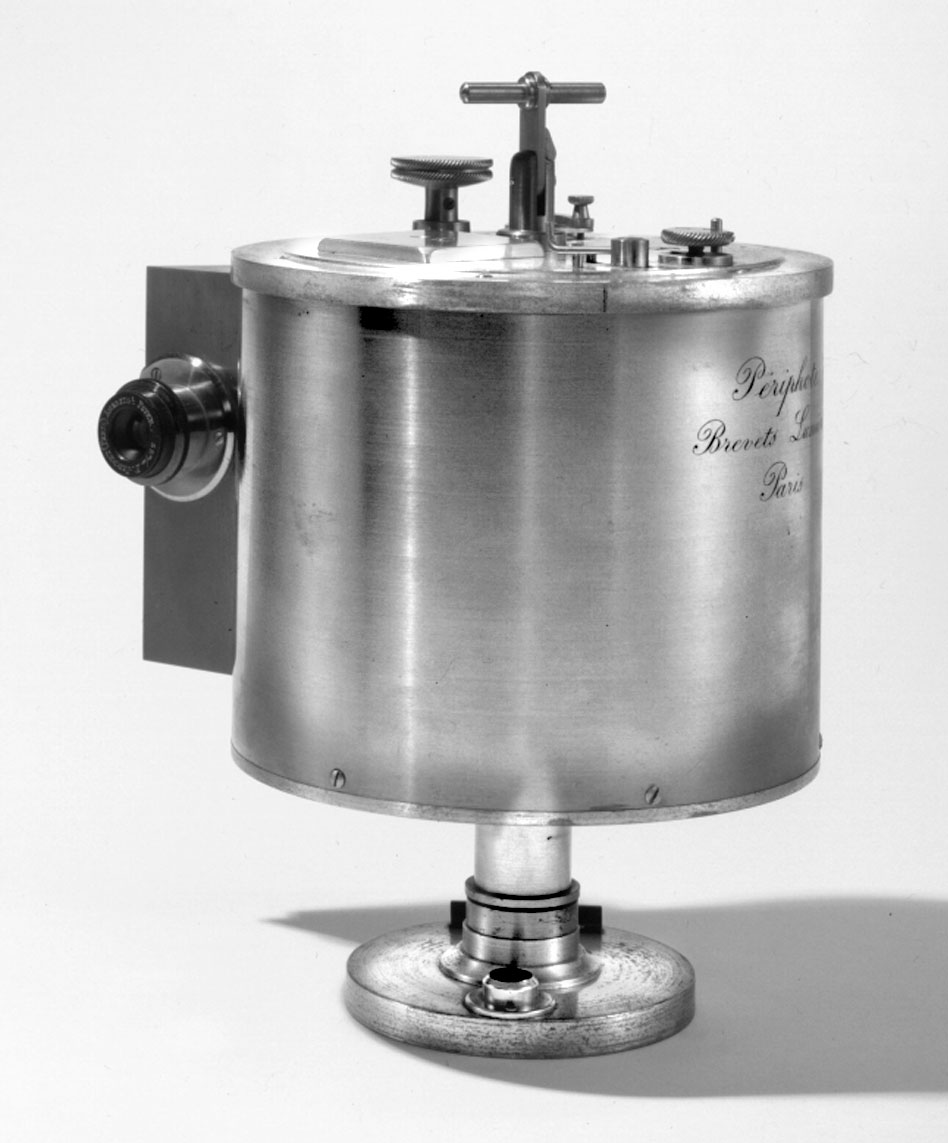
Figure II-11
Périphote des frères Lumières, 1999.
Le site de l’institut Lumière étant avare d’explication et ne proposant aucune illustration de taille suffisante, nous devons au site www.spira.com une l’image reproduite ici. Il existe visiblement un article consacré au Périphote dans le bulletin du Club Nicéphore Niepce : Brochard D., Le Périphote de Lumière, bulletin n°5, p.4.
[16] Une chose est sûre, le cyclograph a bien été inventé par un certain Smith. Mais lequel ? Le Professeur Andrew Davidhazy du département “Imaging and Photographic Technology School of Photographic Arts and Sciences” du Rochester Institut of technologie écrit :
“[The] Invention of peripheral photography may be attributed to Cyril Smith or to Arthur Murray Smith under the name of “cyclographs”…maybe. On the other hand, another account has it that Arthur Hamilton Smith, Keeper of the Greek and Roman Antiquities at the British Museum designed a peripheral instrument with the assistance of the optical firm of Ross for the photography of ancient pottery. This was reported in the Journal of the Royal Photographic Society, volume 19, May, 1895.”
Source : http://people.rit.edu/andpph/text-peripheral-basics.html
...
D’après Tania Ruiz-Guttierez*, cette dernière attribution est confirmée par David Bowen Thomas dans The science museum photography collection (Londres, Ed. Her Majesty stationary office, 1969).
* Tania Ruiz Gutierrez. Études sur le temps et l’espace dans l’image en mouvement. Tissage vidéo, objets spatio-temporels, images prédictives et cinéma infini, op.cit., p. 188.
Cette information est également corroborée par John K. Papadopulos dans The Art of Antiquity : Piet de Jong and the Athenian Agora (Athens, 2007, 334 p., d’après la note de lecture de la Bryn Mawr Classical Review du 22.04.2008, par David Gill (Swansea University, UK)
Source : http://ccat.sas.upenn.edu/bmcr/2008/2008-04-22.html
En tout état de cause, ce type de photographie, connue sous le nom de périphérale échappe souvent aux études consacrées à la photographie panoramique. Michel Frizot (Revoir le panorama, op. cit.) se réfère par exemple à un dispositif mis au point par le photographe Bailly Maître-Grand sans visiblement savoir qu’il dérive en ligne directe du Cyclograph de Smith. Comme le note Andrew Davidhazy :
“Related to the panoramic camera, the peripheral camera is not as well recognized in either the literature or in terms of working models. The cause for this lack of recognition for peripheral photography is probably due to the fact that this application is somewhat more specialized. It is interesting to note, however, that the making of peripheral photographs, sometimes called cyclographs, of Greek and Mayan pottery, has been practiced since the late 1800’s in a number of major museums and also in industrial situations”.
Source : http://people.rit.edu/andpph/text-intro-pan-peri-scan.html
